
Downspouts & Foundation Drainage in Colorado Springs, CO
We connect Colorado Springs-area homeowners with independent local gutter companies for free, no-obligation quotes on new downspouts, upsizing, extensions, splash blocks and drain lines. On expansive soils, where the water lands matters as much as whether the gutter catches it. Here is what the Colorado Geological Survey recommends, how downspouts are sized and placed, and what the work costs.
Get a Free Quote Call (727) 300-6656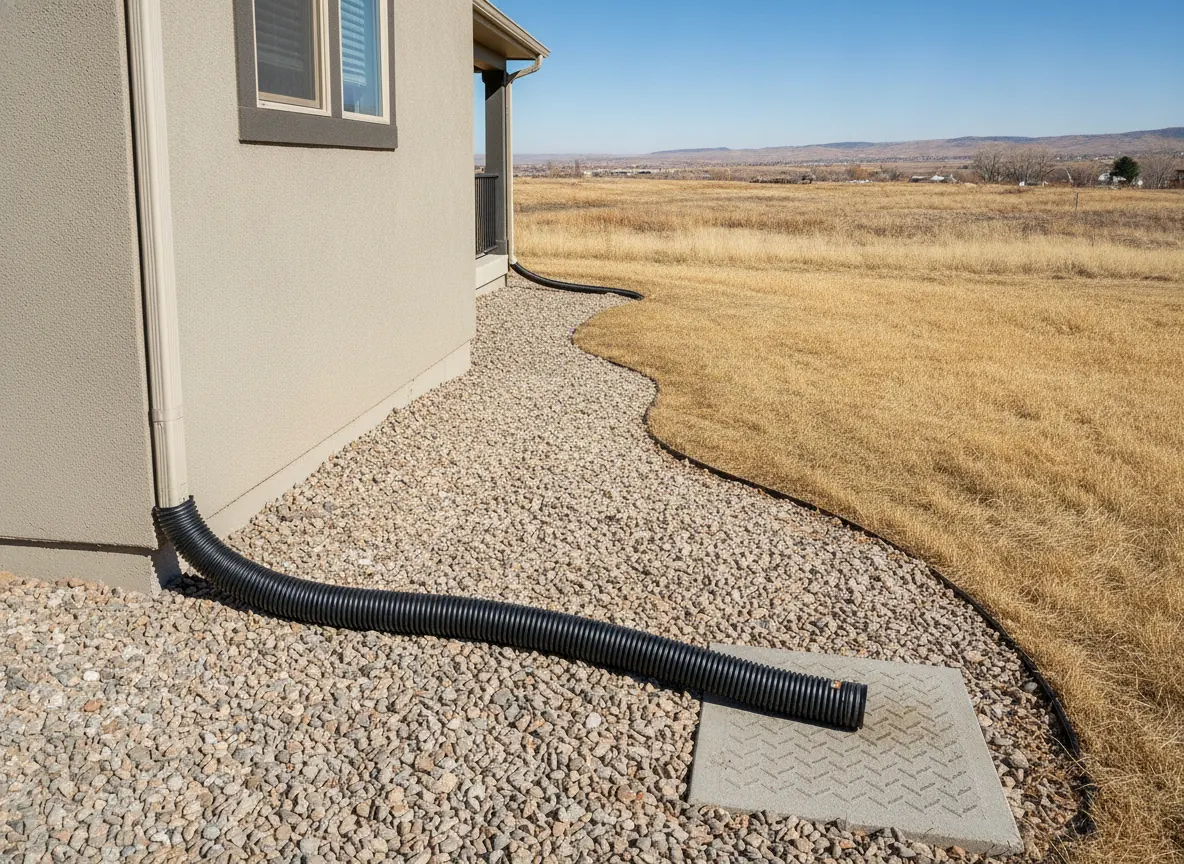
Why five feet matters here: expansive soils
The Colorado Geological Survey calls expansive soil the state’s most significant geologic hazard, and its 1996 engineering review for Colorado Springs and Pueblo says the city “is greatly impacted by the costs and constraints associated with construction on expansive soils.” Clay soils here “are typically expansive to some degree,” and the Pierre Shale and Dawson claystone “can usually be expected to have moderate to very high swelling potential.” CGS map MS-32 charts steeply dipping expansive bedrock across northwest and southwest Colorado Springs, worst within one to three miles of the mountain front.
The same CGS review names the gutter connection directly: “Proper installation and maintenance of gutter downspouts is also a common problem. Roof gutter downspouts can discharge large quantities of water into the subgrade soils. A positive slope of 5 percent in the first ten feet adjacent to foundations is typically recommended.” Its homeowner guide (SP-14) adds that roof water “should be discharged no closer than 5 feet from the foundation,” because poorly compacted backfill lets it percolate straight down to the footing and floor slab.
That is the case for downspout work here. Colorado Springs gets only 15.91 inches of precipitation a year (NOAA 1991–2020 normals), but July and August deliver 6.08 inches of it in short bursts; a downspout that dumps a cloudburst into the backfill beside a basement wall wets the clay unevenly, and differential heave is what cracks foundations.
Downspout sizing, count and placement
Most 5-inch K-style gutters drain through 2x3-inch downspouts; 6-inch gutters take 3x4. A 3x4 moves roughly twice the water and clogs less with needles, so installers often specify it on 5-inch gutters where one outlet serves a long run. A rule of thumb in national cost guides is one downspout for about every 35 feet of gutter, and the CGS homeowner guide draws its downspout detail for gutters longer than 35 feet. Production homes of the 2000s in Falcon, Monument and Wolf Ranch often have the builder’s minimum count; adding an outlet is a routine job.
Placement is about where the water can go: onto ground that falls away from the house, not into a window well, a walkway that ices in January or a neighbor’s side yard. On a tight lot the installer may run a downspout along the wall to a better discharge point, or recommend a buried line.
Grading: the other half of the job
The 2021 International Residential Code, adopted through the 2023 Pikes Peak Regional Building Code, says the grade “shall fall not fewer than 6 inches within the first 10 feet” of the foundation, with drains or swales where lot lines or walls prevent that, and impervious surfaces within 10 feet sloped at least 2 percent away. PPRBD’s local amendments to that section were not part of our research, so treat it as the model code and check with PPRBD. Where settled backfill has made a trough against the house, regrading is the fix.
Security-Widefield and other flat, older subdivisions. El Paso County’s public works director said in August 2024 that chronic flooding there traces to drainage infrastructure 50 to 100 years old and “sheet flow through the whole area.” On lots like that, extensions and grading are basement protection first. See our Security-Widefield page.
Extensions, splash blocks and buried drains
Splash blocks
A concrete or plastic block under the elbow spreads the flow. CGS says blocks should be “long enough and sloped enough to carry all water well away from the foundation and beyond the backfill area,” which a short block rarely does alone.
Extensions
Rigid aluminum extensions matching the downspout, hinged flip-up extensions that lift for mowing, and roll-out sleeves all reach the 5-foot mark. Rigid aluminum lasts longest; hinged versions get left up. Each costs about $2–$17 (Fixr, 2025).
Buried drain lines
Solid pipe from the downspout to daylight on a sloping lot, or to a pop-up emitter in the lawn, removes the trip hazard and keeps water moving, provided the line has fall, a cleanout and a way to avoid freezing solid. Whether a buried downspout drain is treated as plumbing requiring a permit or a licensed plumber here was not researched; ask the installer and PPRBD, and do not assume a storm-sewer or French-drain connection is allowed.
Whichever you choose, have the discharge point written on the quote. Our expansive-soil explainer covers the geology in more depth.
Downspout and drainage prices
| Item | Typical range |
|---|---|
| Downspouts | about $190 each installed (12 ft painted aluminum); $7–$14 per ft; extensions $2–$17 each |
| Gutter repair (re-strapping, elbow replacement) | $194–$643 (avg about $400) |
Typical ranges from HomeAdvisor (2026), Fixr (2025) and a Colorado Springs cost directory (2025) — estimates, not quotes.
Buried drain pricing depends on trench length, soil and landscaping; get it itemized by the foot. Colorado has no state contractor license for gutters, and stand-alone gutter and downspout work generally needs no PPRBD permit or license; confirm with PPRBD for your project, especially for anything underground. Ask for proof of liability insurance and workers’ comp and for the workmanship warranty in writing. The cost guide and seamless installation pages cover the rest.
Colorado Springs Gutter Installation does not install downspouts or drains. The independent companies you reach through the quote form walk the lot, quote and do the work.
Downspout and drainage FAQ
Are downspout extensions necessary in Colorado Springs?
On most lots, yes. The Colorado Geological Survey’s homeowner guide for swelling soil (SP-14) says roof water “should be discharged no closer than 5 feet from the foundation” and that a downspout extension is usually needed to get there, because a short elbow drops water into the loose backfill beside the basement wall. Extensions cost about $2–$17 each (Fixr, 2025), which makes them the cheapest foundation protection on the house.
How many downspouts should a house have?
A common rule of thumb is one downspout for roughly every 35 feet of gutter, and the CGS guide draws its downspout detail around gutters longer than 35 feet. Long runs with one outlet overflow in July and August storms even when clean. Builder-grade homes in Falcon, Wolf Ranch and Banning Lewis Ranch often have the minimum; adding a downspout to an existing gutter is a routine job, so ask for it as a line item.
Can downspouts be buried or connected to a drain?
Yes, buried drains to daylight or to a pop-up emitter are common where a lot falls away from the house. They must keep draining in winter, be cleanable, and not simply move water next door. Whether a buried drain counts as plumbing that needs a permit or a licensed plumber in the Pikes Peak region was not part of our research, so ask the installer and PPRBD before digging. Do not assume a storm-sewer connection is allowed.
What size downspout do I need, 2x3 or 3x4?
A 2x3-inch downspout is standard on 5-inch gutters; a 3x4 carries roughly twice the water and is standard on 6-inch gutters. Installers also upsize to 3x4 on 5-inch gutters where a long run drains to one outlet or where pine needles tend to clog the smaller opening. Ask that the quote state the size, the number of elbows and how each outlet discharges: splash block, extension or buried line.
Where should downspout water go on an expansive-soil lot?
Away from the house and onto ground that keeps falling. CGS engineering practice for Colorado Springs recommends a positive slope of 5 percent in the first ten feet next to the foundation, and the 2021 IRC adopted through the 2023 Pikes Peak Regional Building Code calls for 6 inches of fall in the first 10 feet, with drains or swales where lot lines prevent that. Check PPRBD for local amendments, and keep discharge out of window wells.
Hail season or snowmelt, get a clear gutter quote first.
Free, no-pressure quotes across Colorado Springs, Fountain, Monument, Falcon, Woodland Park and El Paso County.